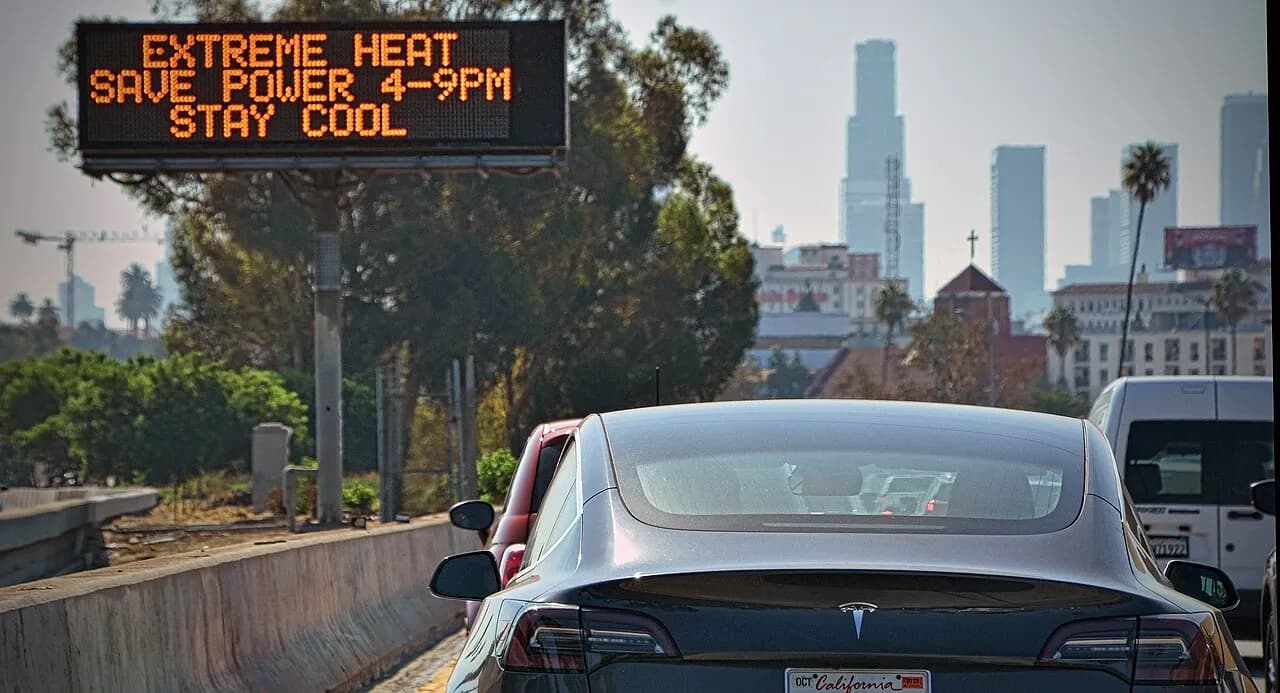
The ongoing heat wave is not simply a weather event. It is a workplace emergency. In factories, warehouses, construction sites, farms, delivery routes and workplaces across the country, workers are being told to keep production moving while heat indices reach life-threatening levels.
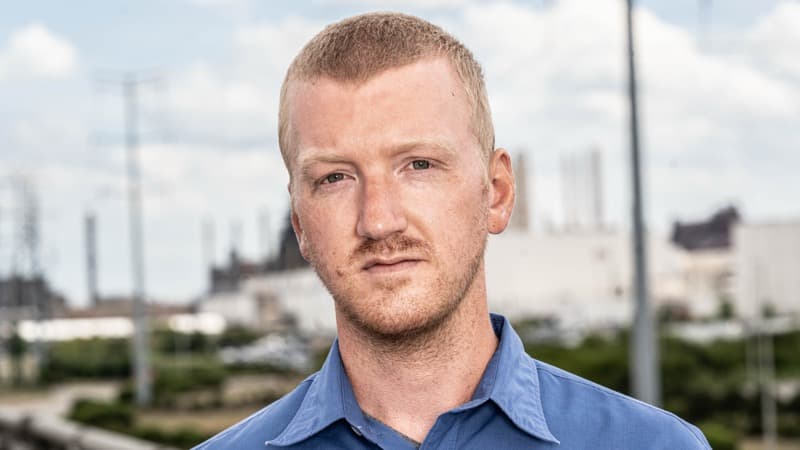
The fact that workers are forced to labor under these conditions is one reason I am running for president of the United Auto Workers. I am not running to administer this apparatus or to make appeals to management after workers are injured or killed. I am running to help build rank-and-file power on the shop floor, so that workers ourselves can decide when conditions are unsafe and stop production before lives are sacrificed for profit.
The National Weather Service has warned of a prolonged and dangerous heatwave across the central and eastern United States, with temperatures of 95 to 105 degrees and heat indices reaching 100 to 115 degrees. In Macungie, Pennsylvania, where the Mack Trucks plant that I work at is located, an Extreme Heat Warning was issued through July 4, and Thursday’s temperature reached 110 degrees. It was even hotter inside the factory.
Every worker knows what this means. It means dizziness, exhaustion, dehydration, nausea, cramping, confusion and the risk of heat stroke. It means workers trying to make rate while their bodies are breaking down. It means workers with heart conditions, diabetes, asthma, kidney problems or medications that affect heat tolerance are put in direct danger. It means workers are told to “be safe” while the company keeps the line running.
Inevitably, people will die because of this, as they do every summer in America. According to OSHA, there were 1,042 U.S. worker deaths from environmental heat exposure between 1992 and 2022, and 33,890 heat-related injuries and illnesses involving days away from work from 2011 to 2020.
The danger is international. Europe has just gone through record-breaking heat, with the World Meteorological Organization reporting major impacts on human health, agriculture, infrastructure and labor productivity. France reported 1,000 excess deaths during the heatwave, and Spain attributed 1,029 excess deaths to extreme heat in June.
The corporations’ concern is not workers’ health but production, market share and profit. They hand out pamphlets about heat stroke and tell workers to drink water. They put up posters listing symptoms. In doing so, they admit they know the risks. Then they turn around and put the burden on individual workers while continuing to run production. That is not safety. That is management covering itself. Air conditioning exists only where profit requires it. In industries such as pharmaceuticals, products must be kept within strict temperature ranges, so the companies provide cooling. Workers’ bodies are treated as less important than pills, parts and machines.
They call the heat wave a “natural disaster.” The hole in that logic is that these “natural disasters,” such as this heat wave, are predicted well in advance. When, under capitalism, nothing is done to protect people from these predictable events it proves the resulting deaths are premeditated.
Workers everywhere are asking the same questions: Where is the union? Where is OSHA?
Where is OSHA? It is not in the plant protecting workers. Even when OSHA acknowledges the danger, its rules, inspections and penalties come far too late, if they come at all. It has always had extremely limited enforcement powers no matter who was in office, because the government is not a neutral referee but a capitalist government defending the profits of American corporations from demands raised by workers, not the other way around. OSHA and other workplace safety agencies are under even deeper attack by the Trump administration through budget cuts, deregulation and reduced enforcement.
Where is the UAW? The answer is: with the company. The company is pushing production through dangerous conditions, and the union is allowing it. The bureaucracy is not preparing a fight to stop unsafe work or shut down production when conditions become dangerous, because it has no interest in leading any kind of fight that would interfere with the company’s drive for production and profit. Workers have to understand that every action we take in our own interests will meet with opposition from the bureaucrats. If workers decide conditions are unsafe and move to stop the line, the UAW apparatus will try to block, contain or isolate that action, just as it has done again and again whenever workers have tried to assert our own power.
At Nexteer in Saginaw, the UAW bureaucrats defied a strike vote and made auto parts workers vote four times on the same sellout contract, the fourth vote taking place in the factory under management intimidation. The same pattern was shown in the Big Three contracts, where the UAW limited a 2023 strike to a handful of plants, and then pushed through contracts which have cost thousands of workers our jobs.
This is why I am running for UAW president: not to replace one official with another at the top, but to transfer power from the hands of a bureaucracy that collaborates with management to the workers on the shop floor.
I am running to abolish the bureaucracy, not reform it, and replace it with new structures that workers actually control, which give us the power to act when conditions are unsafe, stop production when necessary, and link up across plants so that no worker or department is isolated. That is the purpose of building rank-and-file committees, and it is the central issue in my campaign.
Nobody else will come to save us. These dangerous conditions will be ended once and for all only when we the workers organize to force a stop to them, not waiting for officials who are not the ones risking their lives on the line. What is a handful of bureaucrats compared to a factory full of workers acting together? Nothing.
When the pandemic started in 2020, the corporations, the government and the union apparatus wanted production to continue. Autoworkers, acting from below and in defiance of UAW officials, forced the shutdown of major plants in March 2020 when they recognized that their lives were in danger. That experience must be studied and repeated in a more conscious, organized and coordinated form. I urge workers to begin building these committees now, and concentrate our efforts around fighting for the following demands:
- Workers must have the right to stop the line and halt production when heat or any other condition threatens health and safety, with no retaliation, discipline or loss of pay.
- All workers must receive paid heat breaks, unlimited access to cool water and electrolytes, shaded and air-conditioned rest areas, and medical attention on demand.
- Production rates must be reduced or production halted when heat indices reach dangerous levels, including inside plants where machinery, concrete, poor ventilation and physical labor make conditions worse than outside readings suggest.
- All workplaces must be equipped with proper climate controls, including air conditioning and ventilation, paid for by the companies.
- Workers must receive full pay for any shutdown caused by unsafe heat, storms, power failures, wildfire smoke, pandemics or other emergencies.
- All heat-related incidents, near misses, hospitalizations and complaints must be reported immediately and made available to the entire workforce.
- The worthless joint labor-management safety committees must be disbanded and replaced with safety committees made up entirely of active workers elected by and accountable to the rank and file.
These demands will not be won by appeals to management, OSHA or the union bureaucracy. They will be won by workers organizing and acting together. If workers not only in the UAW, but across suppliers, logistics, warehouses, construction and other industries coordinate our actions, management cannot isolate or intimidate us.
The conflict is becoming clearer every day. It is the shareholders versus the workers, with the bureaucracy on the side of the shareholders. Their system treats our lives as expendable. We need a different principle: the health and lives of workers must take absolute priority over production and profit.
No worker should die for a shareholder’s profit. Workers must unite, take control over safety, and fight for a system based on human need, not private profit.
