
Graduate workers at Harvard University are taking a courageous stand against one of the wealthiest and most powerful institutions in the world. With a strike deadline of April 21, 2026 now set, they are saying: enough is enough! I fully support your struggle and urge all workers—academic and industrial alike—to rally behind it.
But your fight will not be won through the goodwill of Harvard's administration, and it will not be won through the UAW apparatus. My urgent message to Harvard graduate workers is this: do not wait to see how the apparatus handles your strike. Form rank-and-file committees now—independent of the bureaucracy, democratically controlled by workers themselves—to take the conduct of this fight into your own hands and prevent a last-minute sellout at the bargaining table.
History makes clear why this is necessary.
Harvard's $53.2 billion endowment makes a mockery of its claim that it cannot afford to pay graduate workers a living wage. Teaching Fellows earn between $18 and $21 per hour—so little that many qualify for state food stamps—while Harvard channels its vast wealth into financial markets and the military-industrial complex. Its counterproposal of a 2.5 percent annual raise, against a documented need for a 74 percent increase just to achieve pay parity between Teaching Fellows and Research Assistants, is not a negotiating position. It is a provocation.
Beyond immediate economic demands, academic workers across the country have increasingly raised broader political demands: against the suppression of anti-genocide protesters, against ICE deportations targeting international students and colleagues, against Trump's destruction of academic freedom and escalating drive toward fascist dictatorship. It is precisely this development—the fusion of economic and political demands—that the UAW apparatus has worked systematically to block.
The pattern of betrayal
This will be the third strike in HGSU-UAW's history. A five-week walkout in 2019 failed to win an initial contract. The 2021 strike, lasting just three days, was settled on terms so bad that, adjusted for 6.2 percent inflation, workers took a real wage cut of 1.2 percent. The apparatus called this a victory.
At the University of California in 2024, academic workers moved to strike in defense of pro-Palestinian protesters attacked and arrested on campus. When management obtained a strikebreaking court injunction, the UAW apparatus surrendered immediately—refusing to defy it, pulling workers back, and abandoning the political demands that had animated the struggle. The message was unambiguous: the apparatus exists not to champion workers, but to contain them—above all when their struggles threaten to take on an explicitly political character.
The same pattern is playing out at Columbia University. Student workers who overwhelmingly authorized a strike have raised demands that go far beyond wages: cops off campus, protection for non-citizen workers from ICE detention and deportation, an end to pervasive surveillance and divestment from weapons manufacturers and institutions complicit in the US-backed genocide in Gaza. These are not peripheral demands. They reflect the reality at an institution that has already capitulated to Trump's shakedown and where co-workers like Mahmoud Khalil have been targeted for deportation simply for advocating Palestinian rights. Last week, Kennedy Orwa, a University of Washington graduate student and UAW Local 4121 member, was deported along with his 13-year-old son—a stark demonstration of the dangers facing international students and workers nationwide.
The response of Region 9A, led by Shawn Fain crony and Democratic Socialists of America member Brandon Mancilla, has been to order the Columbia local to water down these demands. When workers refused, the apparatus threatened to withhold strike authorization and place the local under trusteeship. This is not union democracy. It is McCarthyite redbaiting in the service of the Democratic Party.
The UAW bureaucracy's overriding concern is not your wages, your safety, or your democratic rights. It is the continuation of their dues stream and their privileged relationships with university management, the Democratic Party, and the capitalist state. They are terrified that a genuine strike wave among academic workers could ignite a broader movement that neither they nor their political patrons could control. This is why they suppress strikes, negotiate behind closed doors, extend contracts without membership consent, and threaten locals that refuse to capitulate.
On the political demands academic workers have raised — opposition to the war against Iran, defense of anti-genocide protesters, protection of non-citizen workers from ICE — the apparatus and the Democratic Party offer nothing. The Democrats differ from Trump only on style, not on the fundamental drive toward war and domestic reaction that growing numbers of academic workers are standing against.
The road forward
The Harvard strike, the threatened strike at Columbia, the betrayed struggle at UC — these are not isolated events. They are expressions of a class confrontation that the UAW apparatus is desperate to prevent from becoming what it must become: a unified, politically conscious movement of workers against austerity, war, and authoritarian rule.
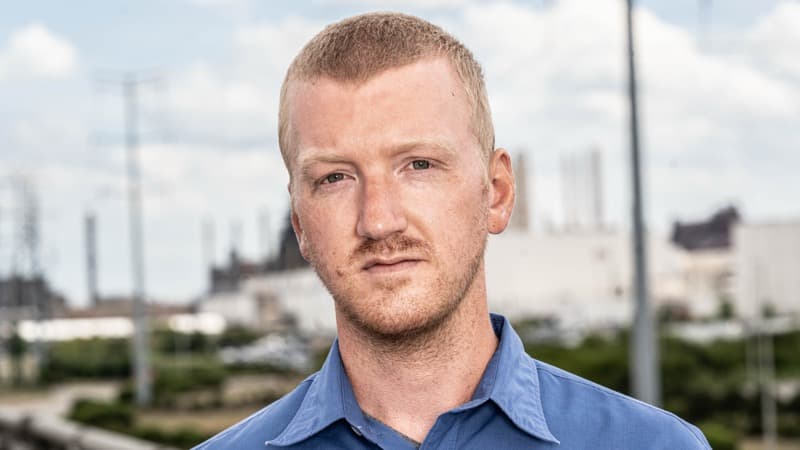
My campaign for UAW president is fighting to build exactly that. I am the only candidate who unequivocally opposes the criminal war against Iran — a war both parties support, paid for with the wages, public services, and futures of the working class. I am fighting to mobilize the full collective strength of UAW members across every sector against war, austerity, and the escalating drive toward authoritarian rule.
Power must be transferred from the bureaucracy to the rank and file. That means forming rank-and-file committees — at Harvard, at Columbia, at every UAW local — that are independent of the apparatus and connected across industries and borders.
To Harvard graduate workers: run for delegate positions in your locals. Help build an insurgent slate to nominate a rank-and-file candidate at the UAW convention. Reach out to Columbia workers and coordinate your actions. Your fight — for dignity, a living wage, and democratic rights — is inseparable from the fight of the entire international working class. The working class stands with you. But do not trust the apparatus to lead this struggle to victory. Take control of your own fight.
