 Will Lehman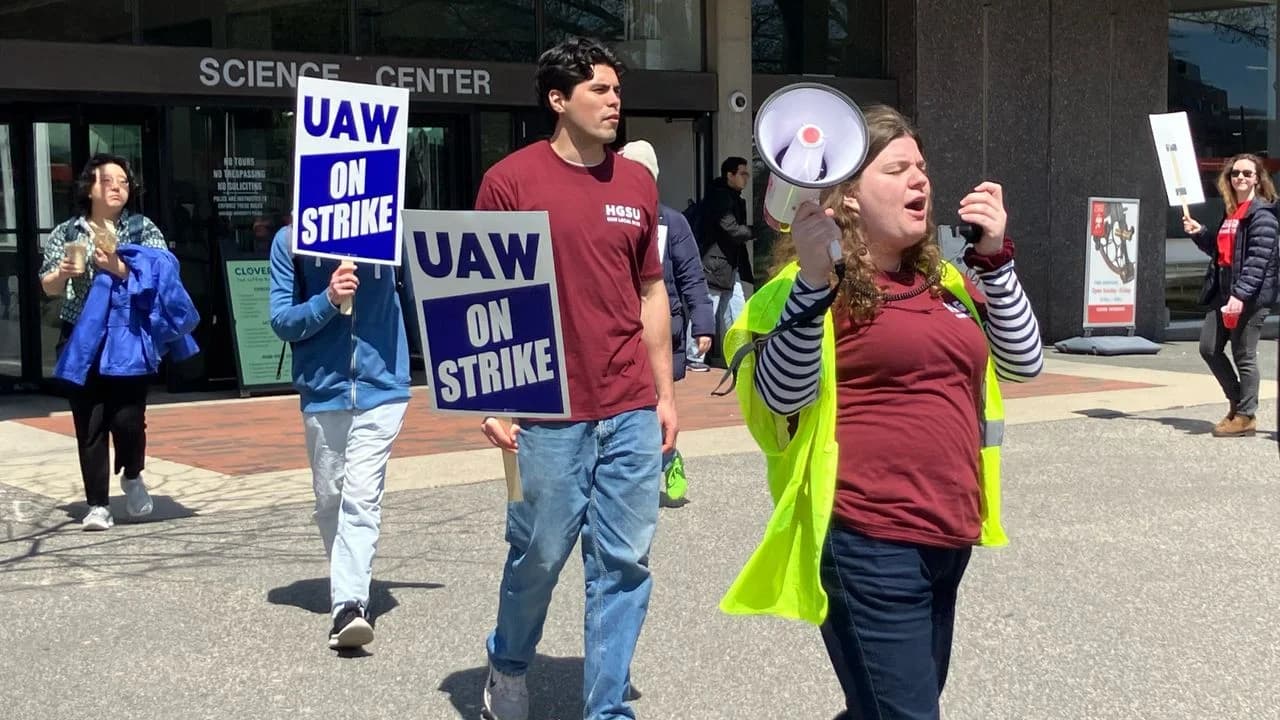
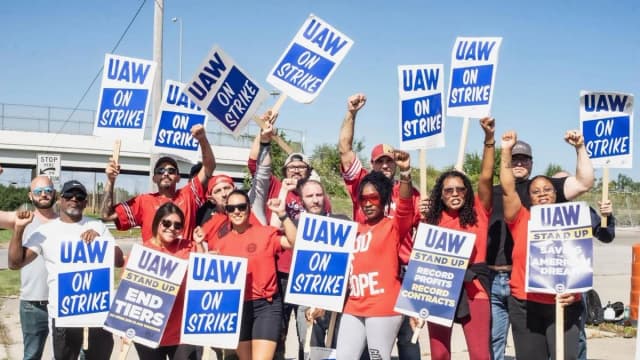
UAW International and Region 9A officials have defied two strike votes by 3,000 members of Student Workers of Columbia-United Auto Workers (SWC-UAW) at Columbia University. As a strike by 4,000 graduate student workers at Harvard University enters its second week, the UAW has also blocked strike action by 4,000 non-tenured track faculty members, preventing a unified walkout by 8,000 workers at the Ivy League university.
The UAW bureaucracy continues to demonstrate that it does not represent the interests of its rank-and-file worker members, but functions as an obstacle to our struggle. At Columbia, thousands of UAW student workers voted overwhelmingly to begin striking on April 23 for their second contract. At Harvard, where UAW graduate student workers are currently on the picket line for their third contract, a majority of UAW non-tenure track faculty voted to go on strike this week for their first contract. Yet instead of authorizing and unifying these struggles into a common fight against these wealthy institutions, the UAW apparatus blocked the democratic will of the rank and file and called off the strikes of Columbia student workers and Harvard faculty members.
A strike is the central and most powerful tool that workers have. Withholding our labor brings production or education to a halt, which the employers can’t do without. It should be the employer who is most anxious to prevent a strike, not a workers’ union. In defying strike mandates, the UAW leadership acts as an arm of management and tramples on the right of workers to fight for improved conditions. These actions are not an accident or a misunderstanding. It is the predictable behavior of a bureaucracy that fears the independent mobilization of workers more than it fears the corporations and universities that exploit them.
At Columbia, student workers are fighting for better living standards, academic freedom, protections for non-citizen workers, and the democratic right to protest. UAW Region 9A has intervened by insisting on the watering down of political demands and threatening to put the local under trusteeship if student workers didn’t comply. This pressured Student Workers of Columbia to drop a number of articles, including the calling for an end to campus surveillance and university-police collaboration. But even after this was done and after student workers voted by 82 percent to begin striking on April 23, the UAW international “rejected our request for strike approval with a recommendation to delay it until it appears that the University will not concede further without a strike,” according to local union officials. And the UAW leadership says this close to a year after the student workers’ contract has expired!
The situation at Harvard makes the betrayal even more glaring. Student workers are already on strike, fighting for living wages and protections, while non-tenure track faculty voted to strike by 53 percent at their general membership meeting. This created an opportunity to unite the struggle for student workers and faculty, who are fighting for similar demands. Expanding a strike—not just on a single campus but multiple campuses—is the most powerful action to strengthen the position of all workers involved. This would be what genuine solidarity looks like. Instead, the UAW bureaucracy isolates workers from one another and strips away their political demands.
This is not the exception, but the rule. UAW leadership kept tens of thousands of University of California academic workers on the job earlier this year despite a 93.3 percent strike vote and expired contracts, and then pushed through a sellout agreement. The same is true of UAW members in the auto industry. Last month at Nexteer Automotive in Saginaw, Michigan, 1,300 auto parts workers rejected a UAW-backed concessions contract by 96.2 percent. UAW President Shawn Fain and Local 699 officials responded by conspiring with management to extend the previous agreement behind workers’ backs and then informing workers it was illegal to strike!
Workers should draw the necessary conclusions. The problem is not insufficient militancy among workers. The problem is the bureaucracy itself. A union leadership that refuses to respect strike votes, blocks unified action and makes decisions behind closed doors cannot be reformed. It must be abolished by a rank-and-file movement that places power directly in the hands of workers on the factory floor, in the classrooms and across the universities.
This fight is about more than one campus or one contract. The same mechanisms of exploitation exist throughout higher education and in the auto industry: precarious jobs, stagnant pay and high workloads while cost of living soars. The division between student workers, faculty, staff, and autoworkers only helps the ruling class. The answer is to unify these struggles on the basis of shared class interests.
A simultaneous strike at Columbia and Harvard by student workers and faculty would set an example for educators, healthcare workers, autoworkers and public-sector employees nationwide. It would link the fight for livable wages to the defense of democratic rights and draw in students and workers into a broader movement. That is precisely what the union bureaucracy, along with both political parties of the capitalist ruling class, fear and work to prevent.
The UAW bureaucracy has hailed Trump’s tariffs and trade war measures, which divide US workers from our brothers and sisters, and has remained silent on the criminal war against Iran. At the same time, Fain has blocked or quickly sold out strikes by UAW members in the defense industry, proving to the government that the apparatus can be relied on to suppress opposition to world war.
The way forward is clear. The membership must take matters into their own hands. The transfer of power from the UAW bureaucracy to the rank and file is not a slogan; it is the only path to win our just demands. Rank-and-file committees—democratically elected by workers, independent of bureaucratic officials—must be formed on every campus and in every workplace. These committees must coordinate and mobilize for real strike action and have full access to the UAW’s nearly $1 billion strike fund, which is paid for with our dues.
My campaign stands for the abolition of the bureaucratic apparatus and the return of power to the workers. My program demands full wage recovery, equal pay for equal work, strong protections for non-citizen workers, defense of academic freedom, and the unconditional right to strike. It insists on international working class solidarity and the building of a network of rank-and-file committees capable of coordinating united actions across universities, industry and national borders. All academic workers interested in this perspective and program should contact my campaign and join this fight.
