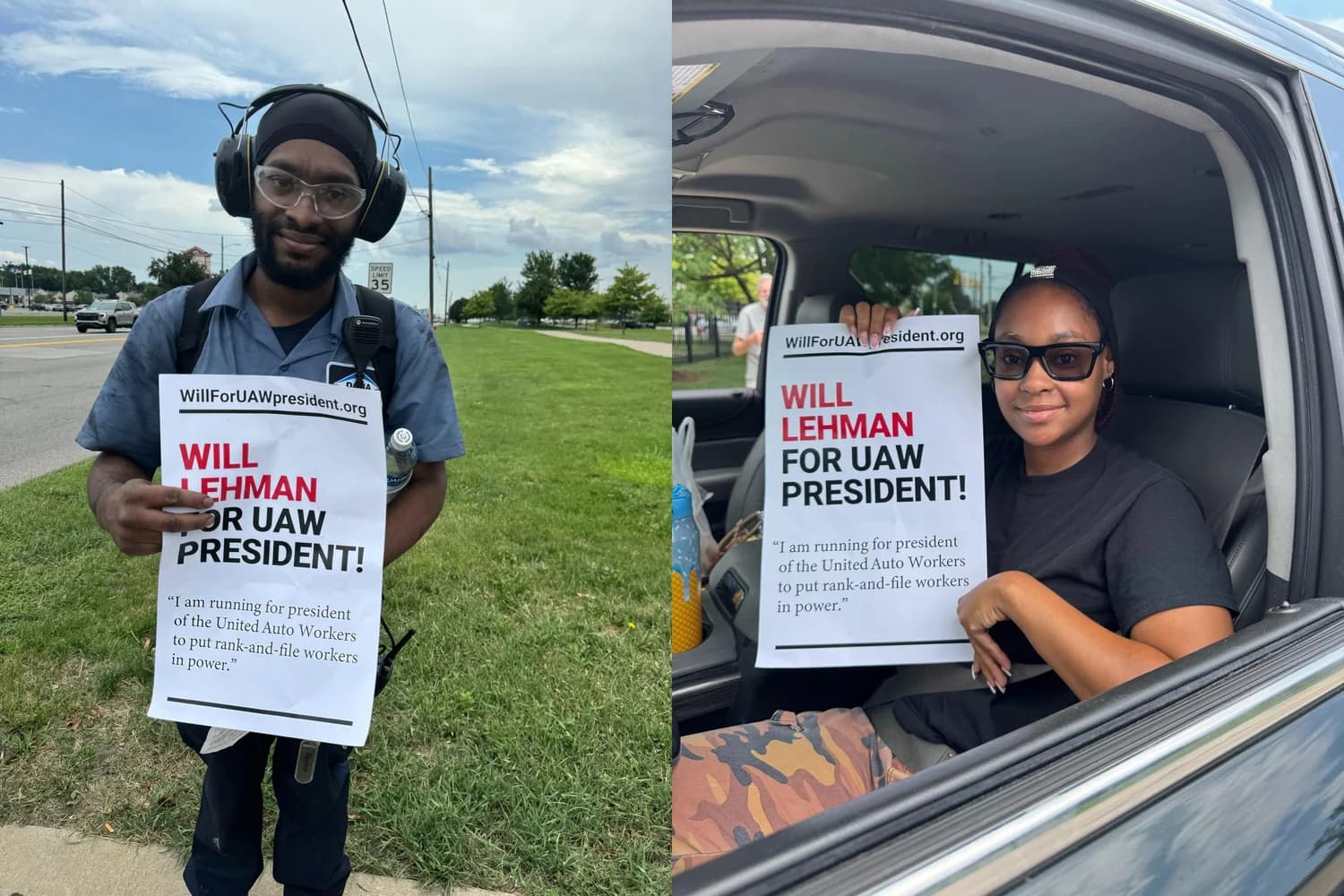
Supporters of UAW presidential candidate Will Lehman received an enthusiastic response from workers at the Dana plant in Warren, Michigan Thursday. The campaigners distributed Will’s campaign statement calling for abolishing the UAW bureaucracy and ending the unrestrained program of union management collaboration and nationalism that has decimated workers’ jobs and living standards. At the center of this fight is the building of a network of rank-and-file committees in each factory and workplace to empower workers based on an international strategy.
Last month workers at the Dana Warren plant voted overwhelmingly to reject a sellout wage agreement negotiated by the United Auto Workers, leading to the collective rejection of the deal by nearly 4,000 Dana workers at plants in the Midwest and upper South. The rejected contract would have maintained the hated tiered wage structure and frozen new hire pay at a near poverty $20/hour over the life of the four-year contract while imposing a $28/hour cap for senior workers.
Since then workers have been kept on the job and in the dark by the UAW bureaucracy despite voting to authorize strike action. Meanwhile, contract negotiations resumed this week and reports indicate a new agreement may be announced soon.
As workers drove in and out during the shift change they expressed anger over the contract terms the UAW bureaucracy is trying to force them to swallow and strong support for Will Lehman’s campaign for UAW president and the transfer of power to workers on the shop floor. The poverty wages and oppressive conditions workers face was reflected in the number of workers who take public transportation or carpool, with four workers in each car. Many young workers were dropped off by parents.
“We’ve got to make more money with the way everything is going up,” one young worker told the campaign team. When campaigners warned that the UAW was in bed with the company, many workers strongly agreed. “I’m with you,” one young worker said. A group of immigrant workers driving in agreed wholeheartedly that the union represented management.
Workers expressed disgust with union officials. A worker pointed to the car in front of him and angrily informed campaigners that it was being driven by a union representative in charge of skilled trades. Campaigners explained that at the recent UAW Constitutional Convention in Detroit, apparatus delegates approved raises of $10,000-$30,000 for UAW President Shawn Fain and the rest of the top UAW leadership.
“The union is for the company,” one veteran worker said. “If we walked out we could shut down the whole auto industry. You need to sacrifice some time to get what you need.”
Indeed, Dana workers are in a powerful position. The Dana Warren plant produces driveshafts, axles and other components for some of the most profitable vehicles sold by General Motors, Ford and Stellantis. The company raked in $610 million in 2025 profits, while closing plants and slashing costs at the same time.
Those profits are being coined off the health and lives of Dana workers. An example of the regime at the Dana Warren plant is the case of Kamara Bond, fired twice for reporting unsafe conditions at the plant, including dangerous high temperatures and unsafe oil and chemical spills and lack of proper masking. These conditions may have contributed to the death of Anthony King, her co-worker, who was found in extreme distress by his workstation and died in October 2025.
Rather than fight for safe conditions at Dana, UAW officials colluded with management to have Kamara fired.
Campaigners told workers they needed to take the contract fight into their own hands by building a rank-and-file committee. They advised of the recent struggle by Nexteer auto parts workers in Saginaw, Michigan, where workers were forced to vote four times on a sellout agreement workers didn’t want until the UAW got it narrowly passed after holding a vote under dubious circumstances inside the plant.
A young worker who takes a bus to work said, “It’s bad inside there. They preach safety but there is oil all over the floors. It’s hot in there now. They say they are fixing the roof to let in more air but we don’t know if that’s going to do anything.”
A number of workers pointed to the grueling seven-day work schedule at the plant. Mandatory weekend work has been an ongoing issue at Dana. It factored into the overwhelming initial rejection by Dana workers of the 2021 contract.
A younger worker said, “I voted ‘no’ on the contract. I wanted to go back and get more money. I think at least by 2030 we should be at $30. There should be a sign-on bonus for the people who have been here of at least $5,000. A work schedule, so we have a weekend off. You are going to wear people out in this 100 degree weather. It is not fun.”
