 Will Lehman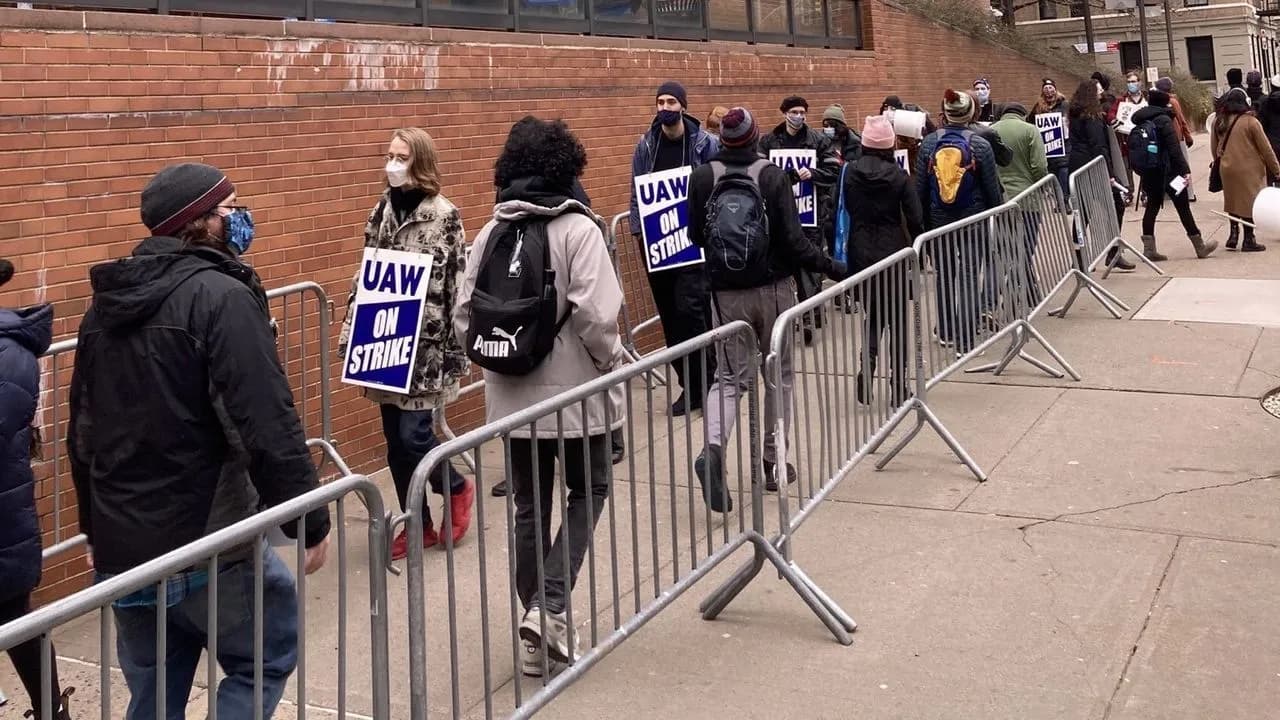
The United Auto Workers bureaucracy has again exposed whose side it is on—and it is not ours.
Graduate and undergraduate student workers at Columbia University voted by 91.5 percent to authorize a strike, 1,129 to 105. That is an overwhelming democratic mandate to fight poverty wages, protect international workers, defend academic freedom and resist political repression on campus.
Yet the UAW apparatus—under Region 9A Director Brandon Mancilla, a prominent member of the Democratic Socialists of America, and servicing representative Courtney Bither, both making six figure salaries—moved immediately to block the strike. Bither informed the Student Workers of Columbia (SWC) that no strike would be sanctioned unless demands were watered down. The apparatus also threatened to seize the local and place it under receivership if members refused to retreat. In plain language, the bureaucracy prepared to override a democratic vote and enforce concessions before a single picket line had been struck.
This is the machinery of the union acting as management's enforcer.
The demands so alarming to the apparatus are not extravagant: protections for non citizen workers, the right to protest without arrest or deportation, and an end to campus surveillance and collaboration with police. These are minimal requirements for decent work and basic rights. The UAW officialdom decided they were "too political," insisting that the SWC "move from their current positions" in relation to police repression, academic freedom, or solidarity with international students. The local leadership—dominated by a DSA aligned faction—assisted this bureaucratic attack, policing the demands under the pretense of "realism" and "maintaining bargaining credibility."
Let's be clear about what "political" means here: the right to speak, to organize, and to resist repression. Columbia has become a testing ground for state intimidation on campus. The administration has handed over student data to Homeland Security, brought in the NYPD to suppress demonstrations, and collaborated with federal agencies targeting overseas students. Graduate workers like Mahmoud Khalil and Mohsen Mahdawi have faced detention by ICE. SWC president Grant Miner was expelled for opposing this climate of fear.
Against that backdrop, the UAW bureaucracy is complicit. The UAW apparatus sees Columbia's graduate workers not as workers in struggle but as a lucrative dues stream. Tens of thousands of academic workers have been folded into the union in recent years, supplying millions of additional dollars in monthly dues to sustain a bureaucratic caste whose interests are the opposite of the membership's.
This confrontation at Columbia expresses the same fundamental conflict between the rank and file and the UAW bureaucracy that has played out across the auto industry, at the Big Three, and at every campus where student workers have organized. Shawn Fain and the apparatus around him—no less than their predecessors—preside over a structure that is organizationally and financially tied to management.
Graduate workers should draw the lessons. The bureaucracy cannot be pressured into defending you; it must be opposed and replaced by the organized power of the rank and file. That means taking control of your own struggle. Every decision—on bargaining, on strike timing, on contract ratification—must rest in your democratic hands.
I call on graduate and undergraduate workers at Columbia, at New York University—where a strike deadline has been set for March 23—and across the academic sector, to form independent rank and file committees. These committees should communicate directly with one another and with autoworkers, educators, logistics workers, and others confronting layoffs, speedup, and repression. Such connections will provide the foundation for a genuinely unified workers' movement.
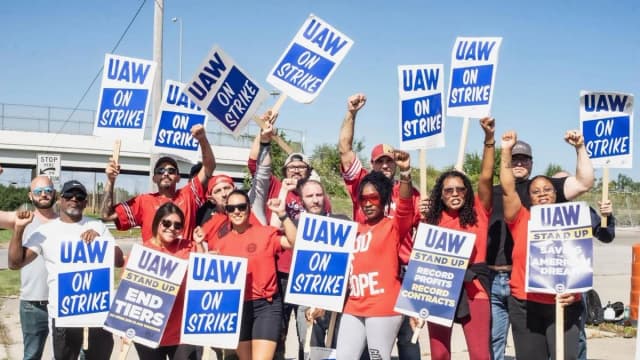
And I call on autoworkers across the country: these graduate student workers are your brothers and sisters in the same union, and their fight is your fight. You cannot allow the UAW bureaucracy to isolate them, suppress their strike, or move toward decertification for daring to stand up for their rights. If the apparatus succeeds at Columbia, it will use the same methods against you. Rank-and-file autoworkers must speak out, pass resolutions, organize support, and be prepared to take action to defend these workers and enforce their democratic mandate. An injury to one is an injury to all!
The resources to fight exist. The UAW controls assets of over a billion dollars—money built from workers' dues. That wealth must be placed under the democratic control of the membership, used to provide full strike pay from day one, not to fund salaries for officials who sabotage strikes.
I am a Mack Trucks worker running for UAW president in 2026 on a program to transfer all decision making power to the rank and file, dismantle the bureaucratic hierarchy, and turn the UAW into an instrument of genuine class struggle. The upcoming UAW Constitutional Convention will be a decisive battleground. I urge graduate workers to stand as insurgent delegates and ensure that the democratic mandate of Columbia's membership—and every other local—is heard.
Your 91.5 percent strike vote speaks to enormous courage and clarity of purpose. The challenge is to ensure it is not buried by the apparatus but carried forward by the workers themselves.
The fight for a living wage, for academic and political freedom, and for the right to speak and organize is one and the same fight. We have the strength to win it—but only if we take it into our own hands.
